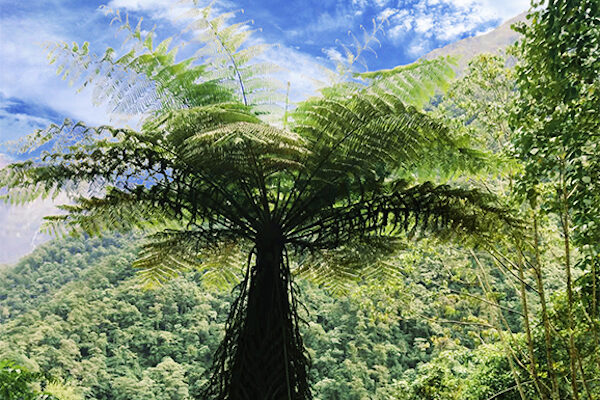

Planting forests is one way to mitigate climate change. The origin of seeds is crucial to optimize the success of planted trees and their ability to adapt to future climates.
Understanding how plants process light is key to improving crop yields. Light helps plants know when to grow and flower at the right time. Plants find light using proteins called photoreceptors. The research team uncovered how proteins called UBP12 and UBP13 help regulate…
An awn is a needle-like structure seen in grass species, whose presence or absence in plants is controlled genetically. However, this mechanism is poorly understood in sorghum, a cereal widely consumed around the world. Now, researchers from Japan have identified…
New research has revealed that plants make their own ‘secret’ decisions about how much carbon to release back into the atmosphere via a previously unknown process, a discovery with “profound implications” for the use of plants as carbon stores.
Over 200 years ago, a Spanish botanist described Artocarpus odoratissimus, a species of fruit-bearing tree found in Borneo and the Philippines. The Iban people, who are indigenous to Borneo, know the tree to have two different varieties, which they call lumok and pingan, distinguished…
Respiration in plants is a process that consumes sugars (e.g., glucose) and oxygen, produces carbon dioxide (CO2) and water, and releases energy to maintain the primary metabolic and physiological functions during growth. It determines the net carbon gain for plants…
Researchers are forecasting that by 2040-60, Sosnowsky’s hogweed will likely exploit global warming to expand its habitat, threatening to infest almost the entire European part of Russia.
The length of time a flower remained open (i.e., from anthesis to flower senescence) is called floral longevity. Floral longevity has been considered as one of the most important reproductive traits as it determines opportunities for pollen dispersal and capture…