
COP31 · Antalya, Türkiye · 9–20 November 2026

Plants are central to the climate question

Climate change is changing not just how much our crops yield, but what is inside them. Ahead of COP31, the Global Plant Council — an accredited UNFCCC observer representing more than 30,000 plant, crop, agricultural and environmental scientists — sets out what the coming decade requires.

rice close-up

1

Up to 1 billion people rely on cassava as a staple crop

600

Around 600 million people face risks as rice loses nutitional value

Our COP31 policy collection

Open-access outputs for negotiators, governments and agencies. Free to read, share and cite (CC BY 4.0).

Policy statement: Plant science and the climate transition
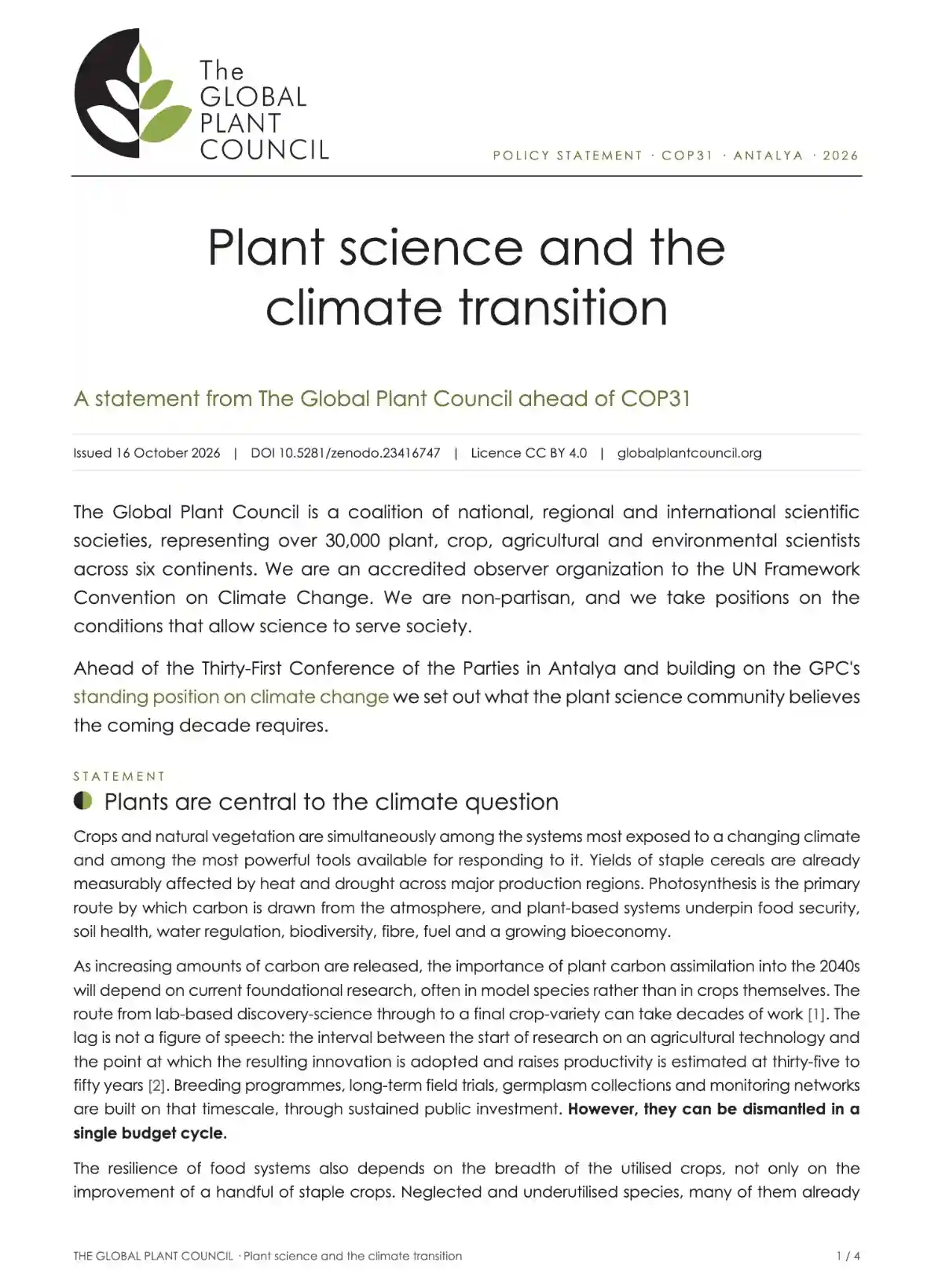
This statement from The Global Plant Council, issued ahead of the Thirty-First Conference of the Parties to the UN Framework Convention on Climate Change (COP31) in Antalya, sets out what the plant science community believes the coming decade of climate action requires.

How Climate Change Is Rewriting Staple Crops
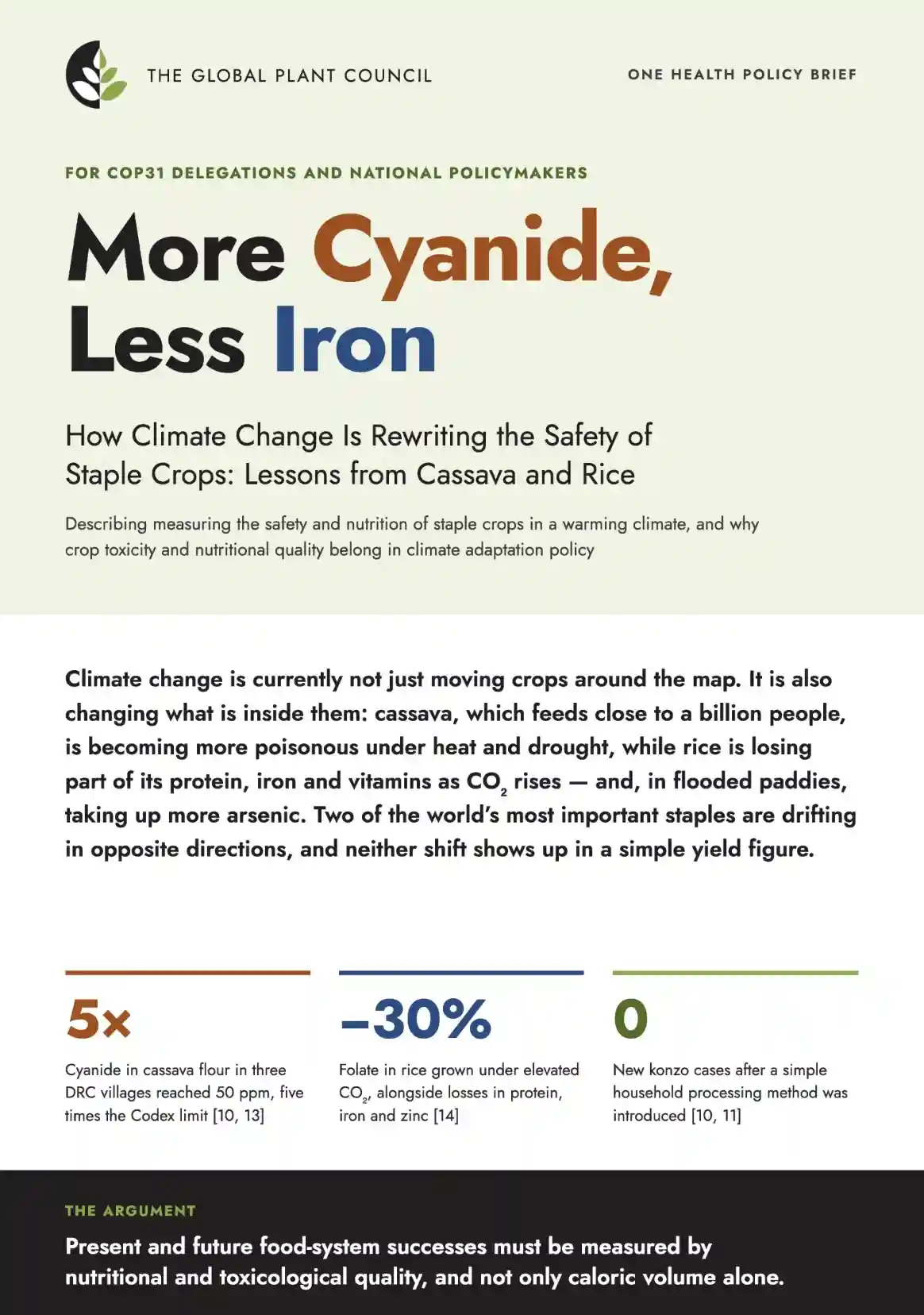
Climate change is not only shifting where staple crops grow; it is changing what is inside them. This One Health policy brief from GPC argues that plant biochemistry is an under-recognised driver of human health, and that crop toxicity and nutritional quality belong in climate adaptation policy.

Konzo: the sentinel disease of climate inequality in sub-Saharan Africa
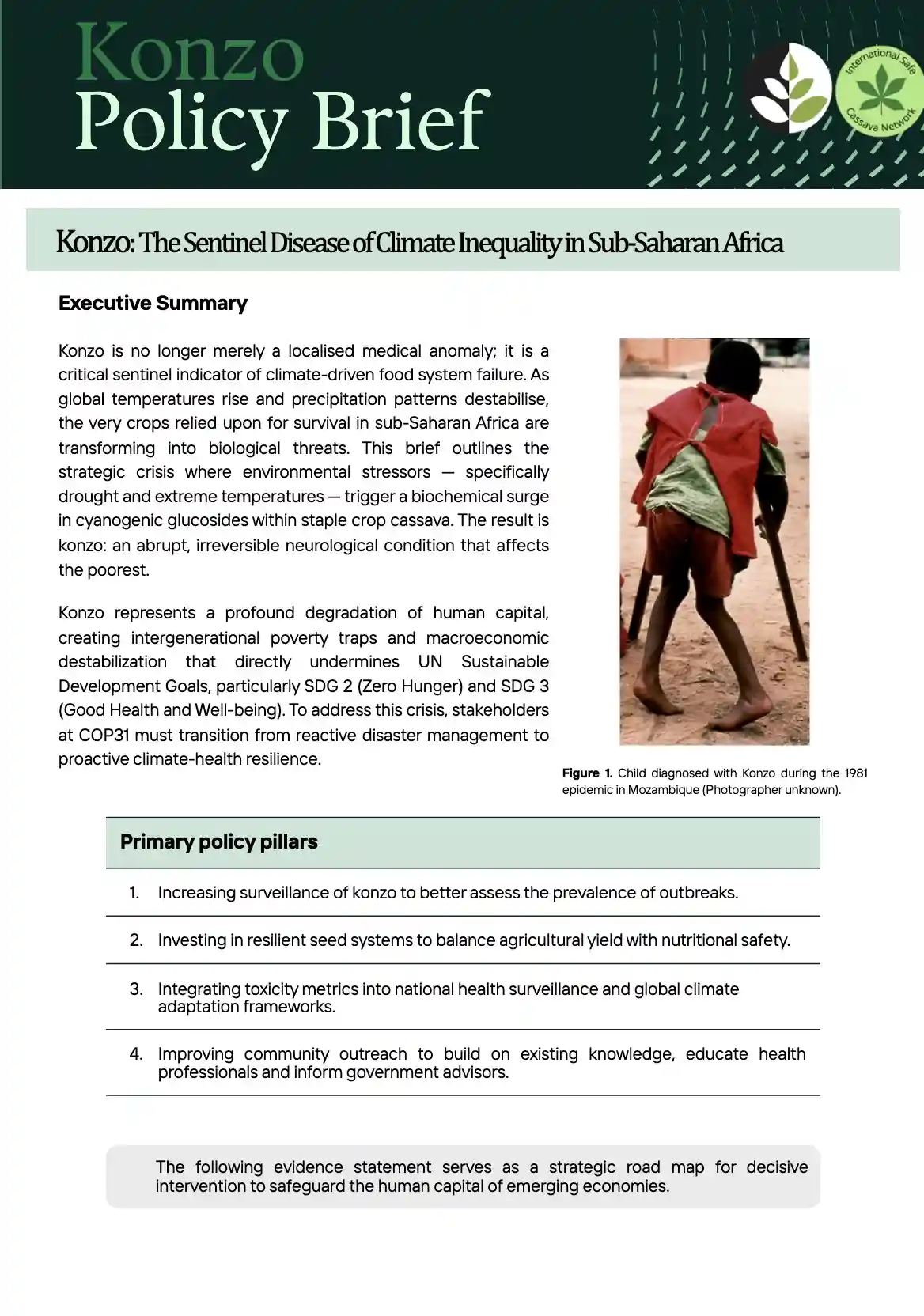
This policy brief was created in collaboration between The Global Plant Council (GPC) and the International SafeCassava Network (ISCN). This brief outlines the strategic crisis where environmental stressors trigger a biochemical surge in cyanogenic glucosides within staple crop cassava.