
The 19th Focal Point Forum on adaptation, Green Transition for Food Security and others
Hello, this is Deena Errampalli, a Director of the Global Plant Council. Thanks for checking the blogs on the GPC website.
Geraint, my colleague from the GPC, has posted COP31 conference blogs for the past four days. From now on, I will continue posting blogs until the end of the COP31 conference.
General: The COP31 process is built on three core values: dialogue, consensus, and action. This means favoring dialogue over unilateralism, consensus over division, and action over stagnation.
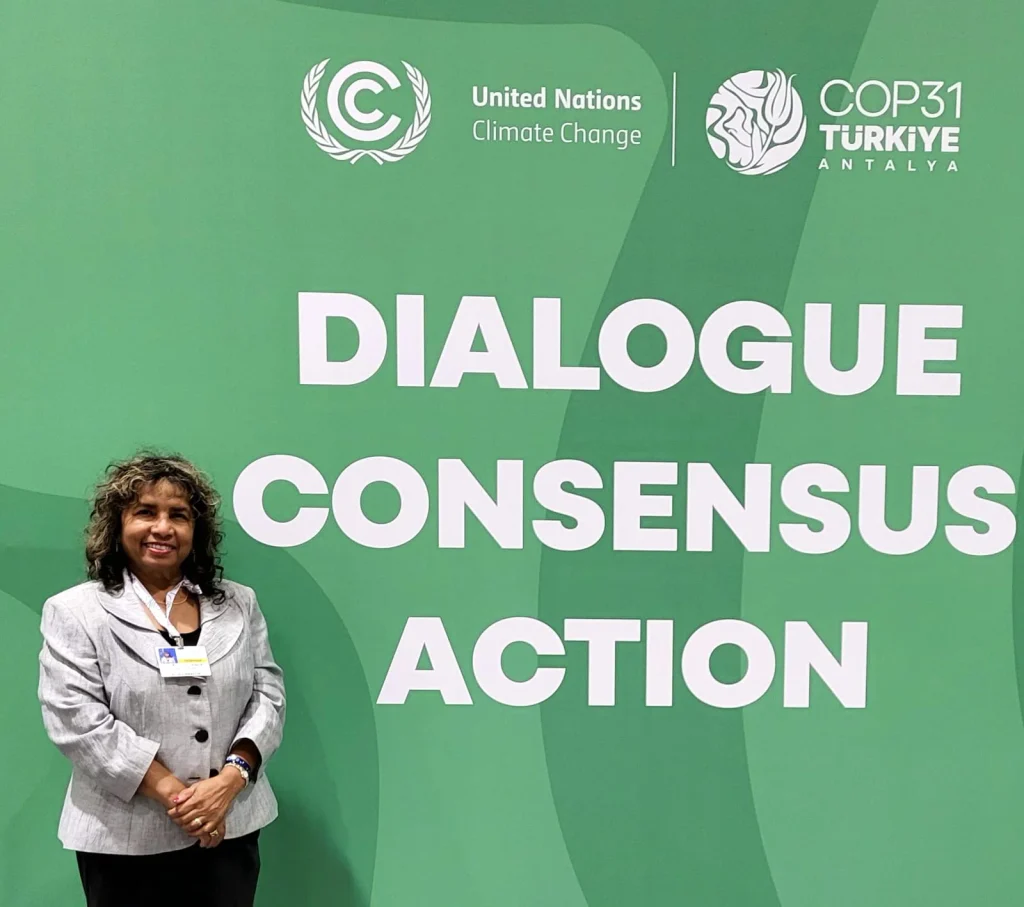
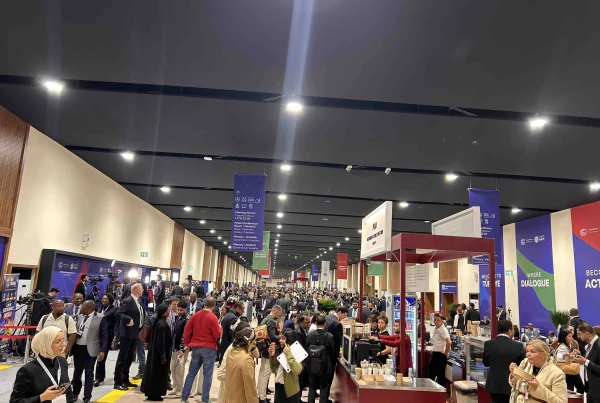
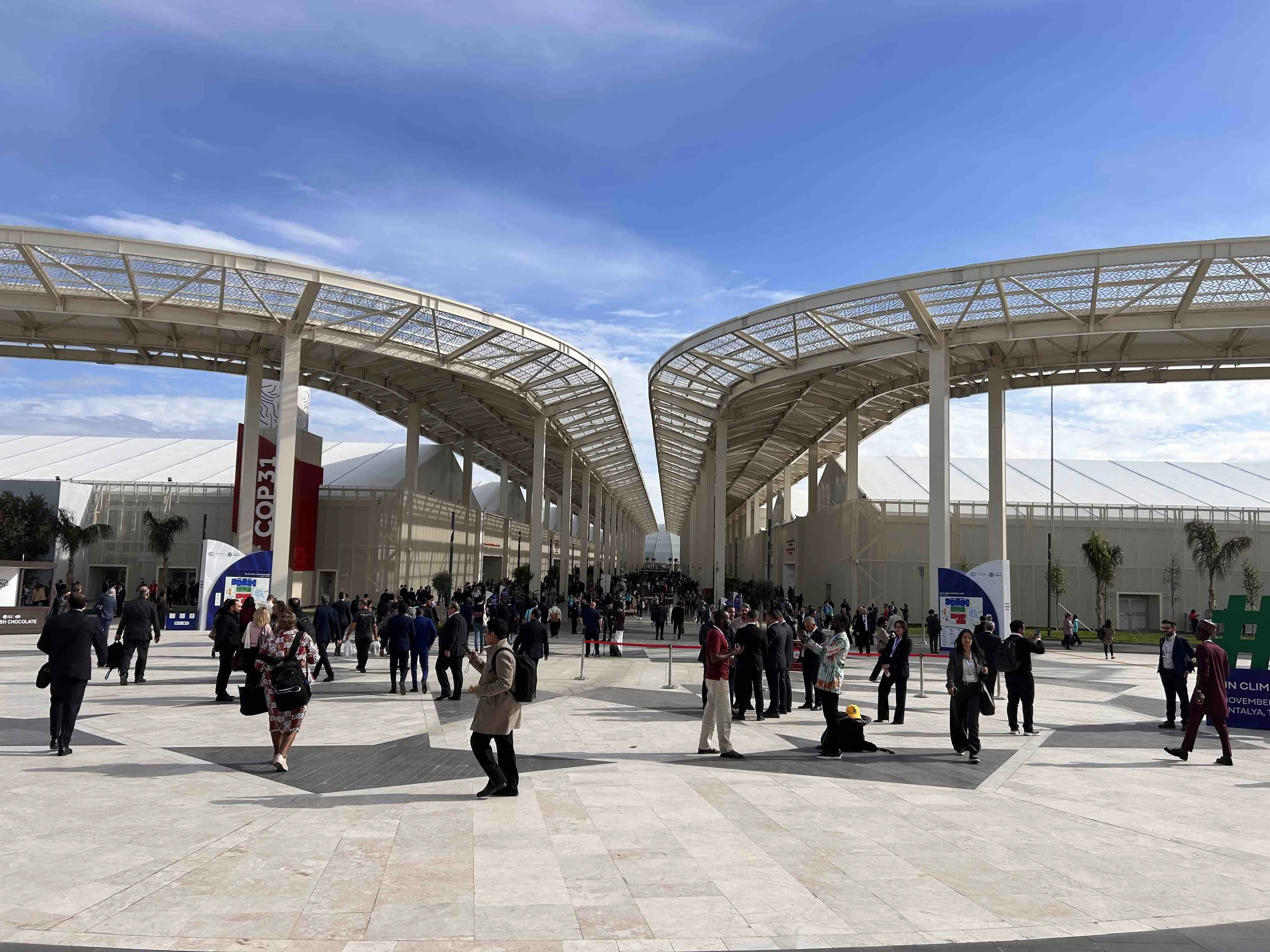
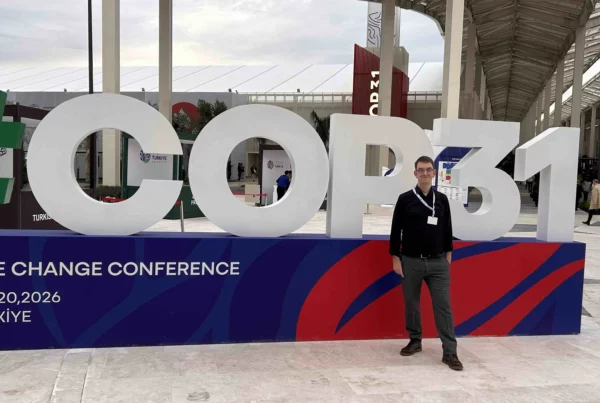
This COP31 Climate Change Conference is one of the biggest conferences, with 100,000 delegates from 200 countries. You can imagine the magnitude of this meeting. There are many concurrent sessions with various climate-related topics.
The COP31 Action Agenda highlights ten priority themes. The priority theme for day 5 is Finance and Trade.
Specific topics: I will try to highlight specific events I attended today.
Geraint wrote about some of the presentations held at the CGIAR/FAO pavilion as the ‘Side Events’.
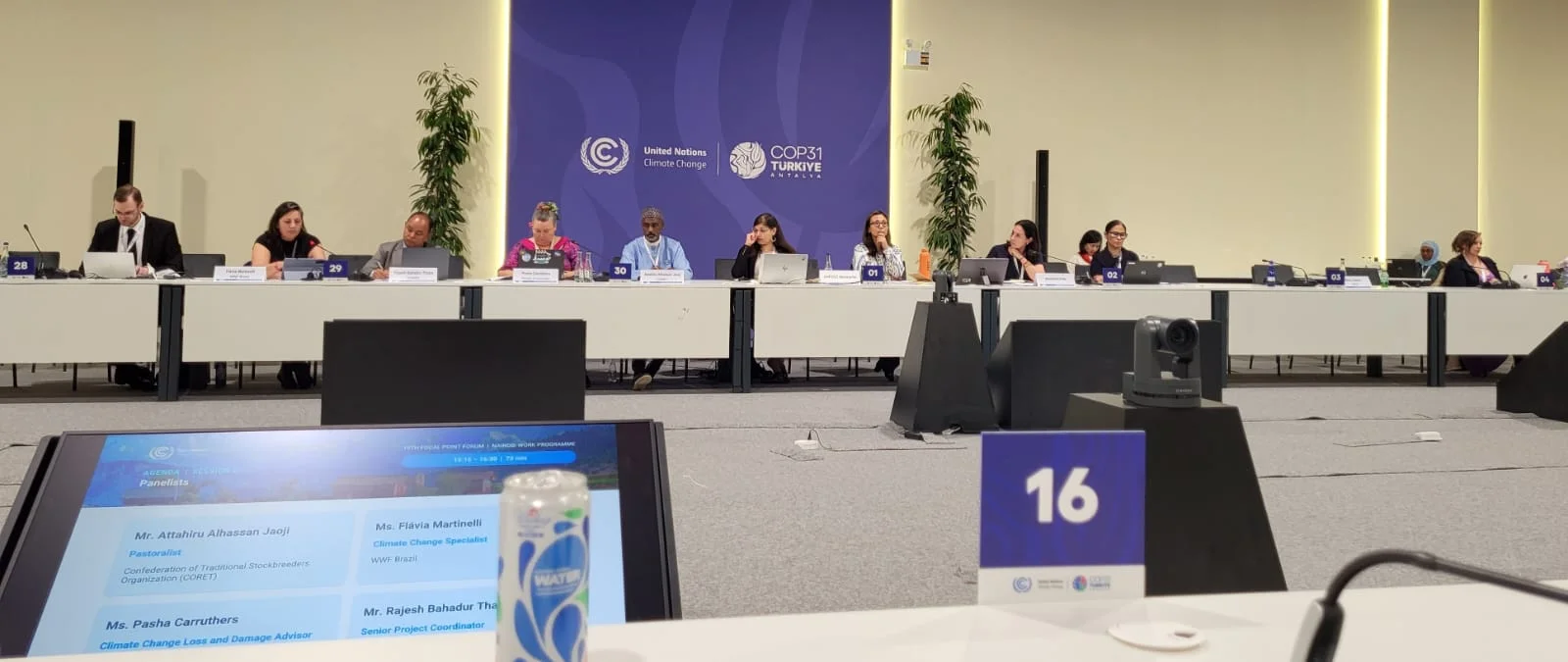
My main agenda item for today was attending the 19th Focal Point Forum of the Nairobi Work Programme (NWP) at COP31 from 15:00 to 18:00 hrs local time.
This is a larger meeting than a Side Event, with attendees from the United Nations system, specialized agencies and other relevant organizations, and admitted intergovernmental and non-governmental organizations (NGOs).
The Global Plant Council is an accredited NGO observer. On invitation, I registered last week to attend the 19th NWP Forum.
Just to provide you with some background, the Focal Point Forum was initially mandated by the Subsidiary Body for Scientific and Technological Advice (SBSTA) at its 28th session (FCCC/SBSTA/2008/6) for the secretariat to regularly organize focal point forums with representatives from interested Parties during the sessions of the Conference of Parties (COP).
UN Climate Change Executive Secretary, Simon Stiell, in his COP31 Opening Statement on November 9, 2026, said, “So, as well as sending signals, COP31 must supercharge solutions. Breaking down existing global targets and national plans into component steps.”
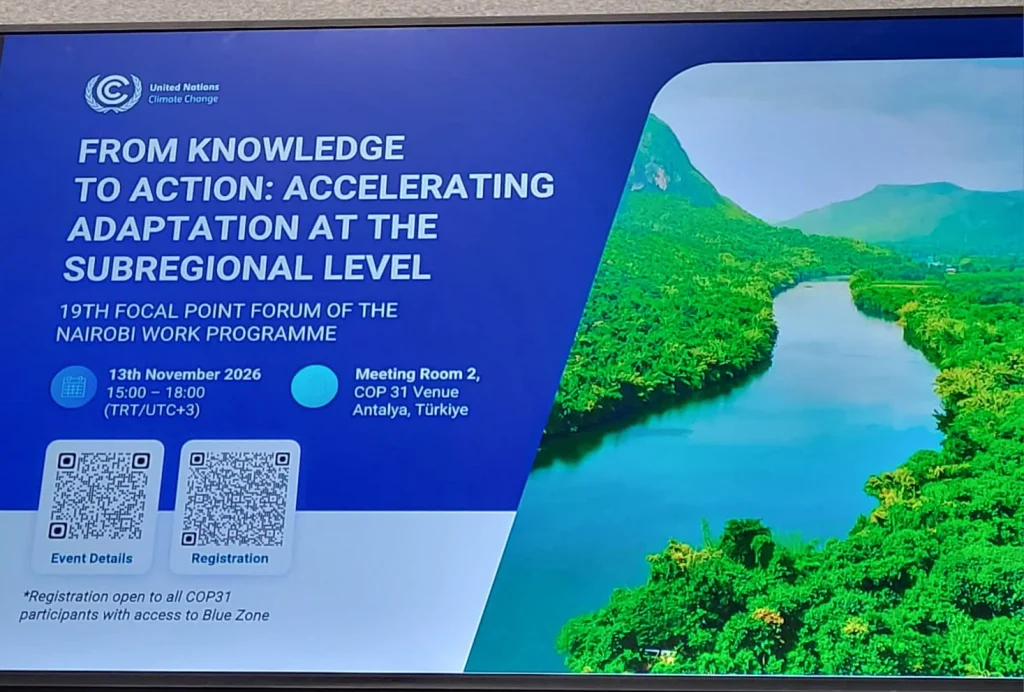
Building on that, the 19th Focal Point Forum was titled, “From knowledge to Action: accelerated adaptation at the subregional level.” Representatives from all the continents, NWP partners, and diverse knowledge holders shared practical lessons and identified ways to scale up adaptation. The forum explored how knowledge, expertise, and partnerships can address current and emerging adaptation knowledge and know-how needs across thematic areas and deliver context-specific, actionable solutions for countries and communities at the subregional level.
Takeaway message: Overshoot is happening: Global temperatures will exceed 1.5°C in the next few years. How are we prepared to face the risk of this overshoot? How do the ecosystems respond to the temperature increases? Compounding climate change, population growth is projected to increase. To overcome the challenges, Knowledge is important. With changing scenarios, we need to generate new knowledge to address the overshoot. We need to put identified solutions into action. Make the existing and new knowledge accessible to people/adaptation practitioners at the sub-regional level. The next step is adaptation. Panelists highlighted the importance of partnership to face these challenges. Of course, every penny is needed in climate finance. Adaptation will be successful and effective when used in connected systems and in collaboration.
Health and Nature-Based Solutions.
The COP31 Presidency introduced initiatives linking climate adaptation with health resilience, while programs like the Commonwealth Secretariat are highlighting nature-based solutions – such as mangrove restoration and coastal seawalls – as vital infrastructure. Health and Nature-Based Solutions.
Plant science/Agriculture related event
At one of the Side Events in the Blue Zone, Ms. Chiara Gottardo, International Fertilizer Association (IFA); Ms. Milloni Doshi, Environmental Defense Fund (EDF); Ms. Mishel Ciceron, Ms. Mishel Ciceron, Ms. Mishel Ciceron organized a meeting titled, Delivering the Green Transition for Food Security: From Climate Ambition to Farm-Level Action.
Speakers from the International Rice Research Institute (IRRI), Environmental Defense Fund (EDF), World Farmers’ Organisation, AGRA, Yara, World Bank, Agroicone, and The Carbon Trust, explored practical pathways to deliver the green transition in agriculture while strengthening food security through efficient nutrient management, low-emission rice systems, enabling policies, investment and partnerships that support farmers, decarbonization and sustainable development.
IRRI is a core member of the CGIAR, the world’s largest global agricultural innovation network. IRRI is also a member organization of the GPC.
Before closing today’s blog, I just want to bring to your attention that two High Level (Ministerial) Events were scheduled for today: 1) High-level event to exchange experiences and views on matters related to the Global Implementation Accelerator, 13:00 to 15:00, and 2) Seventh biennial high-level ministerial dialogue on climate finance, 15:00 to 18:00. More information on this later. We will post links for these later.
COP31 organizers also included art that depicts Climate Change. Here is a photo of a fabric art titled, Interwoven Journeys.
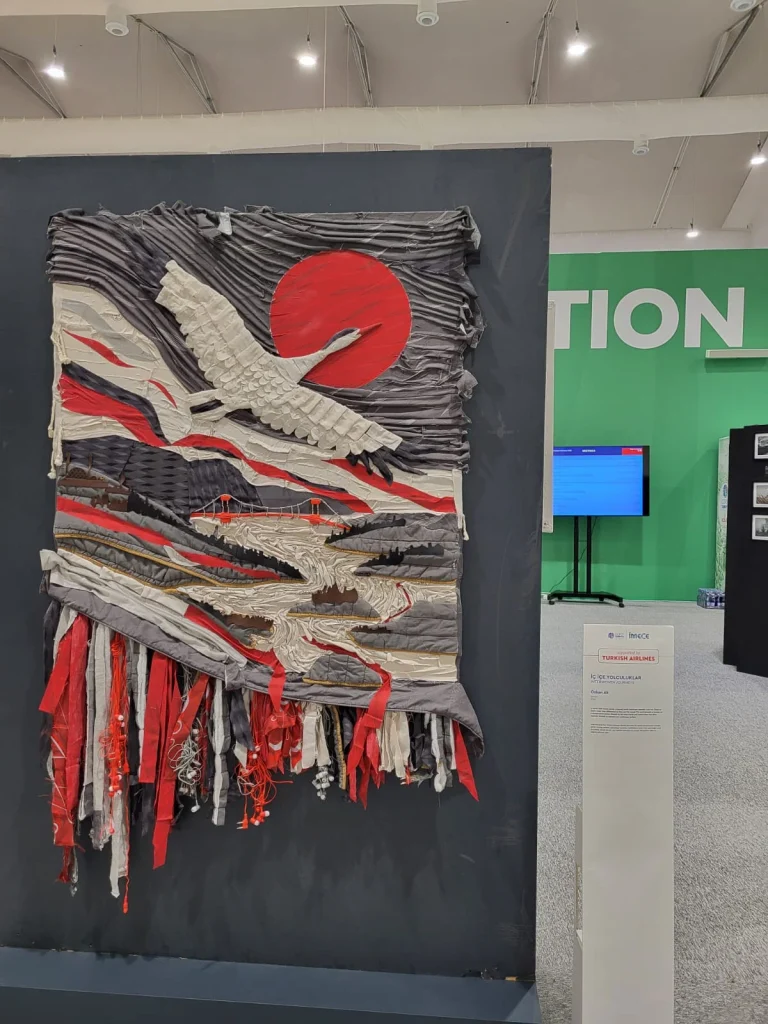
The woven bird moves across the layered textile landscape beneath the red sun. Strips of fabric retain their differences as they join the image. The work presents a journey as a shared construction, shaped by the many hands and connections that allow separate threads to become one continuous surface.
Until tomorrow..