
Smart people building collaborations
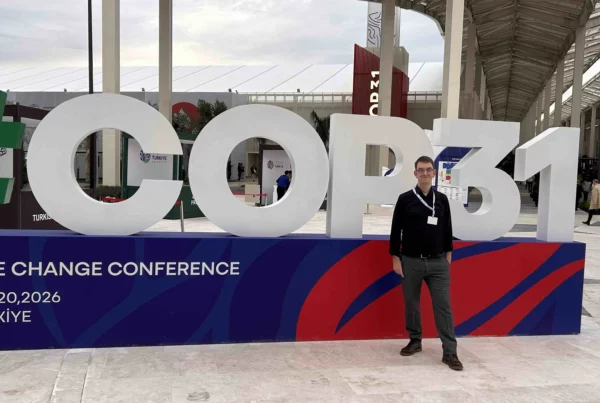
So I didn’t find any plant science today but there was again plenty to think about at COP31.
I’m feeling a little under the weather so set off for the meeting a little later and benefitted from a seat on the tram, which is a nice bonus!
I find that the more time you spend at COP31, it makes you think about the purpose of the meeting. I have seen a little coverage of leader speeches but I expect they either said that we on track to address the climate crisis (the rich nations) or criticising the rich nations for not moving fast enough to makes changes and payments (the LMICs).
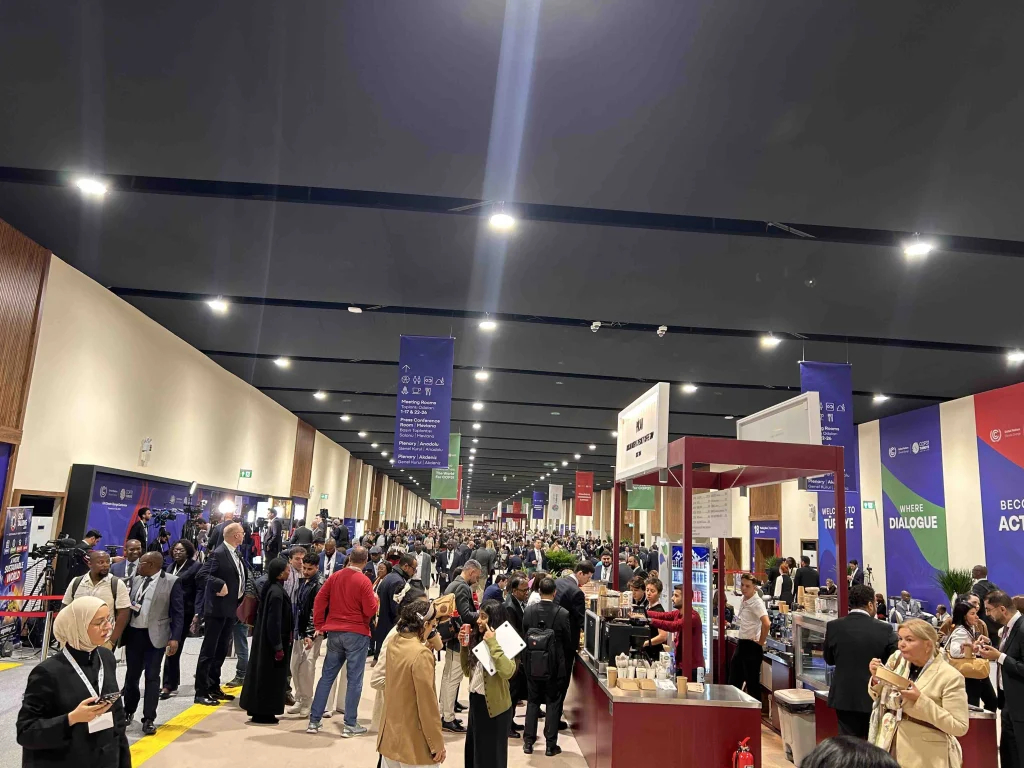
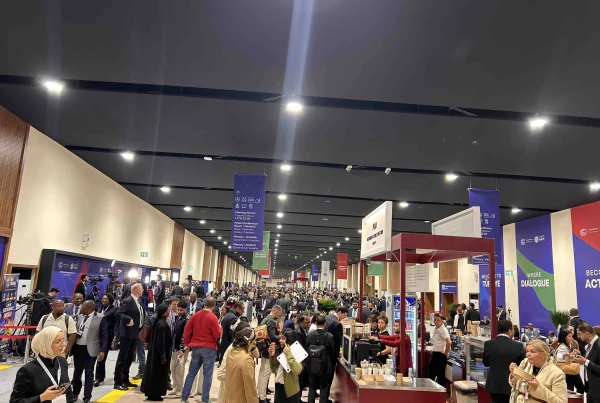
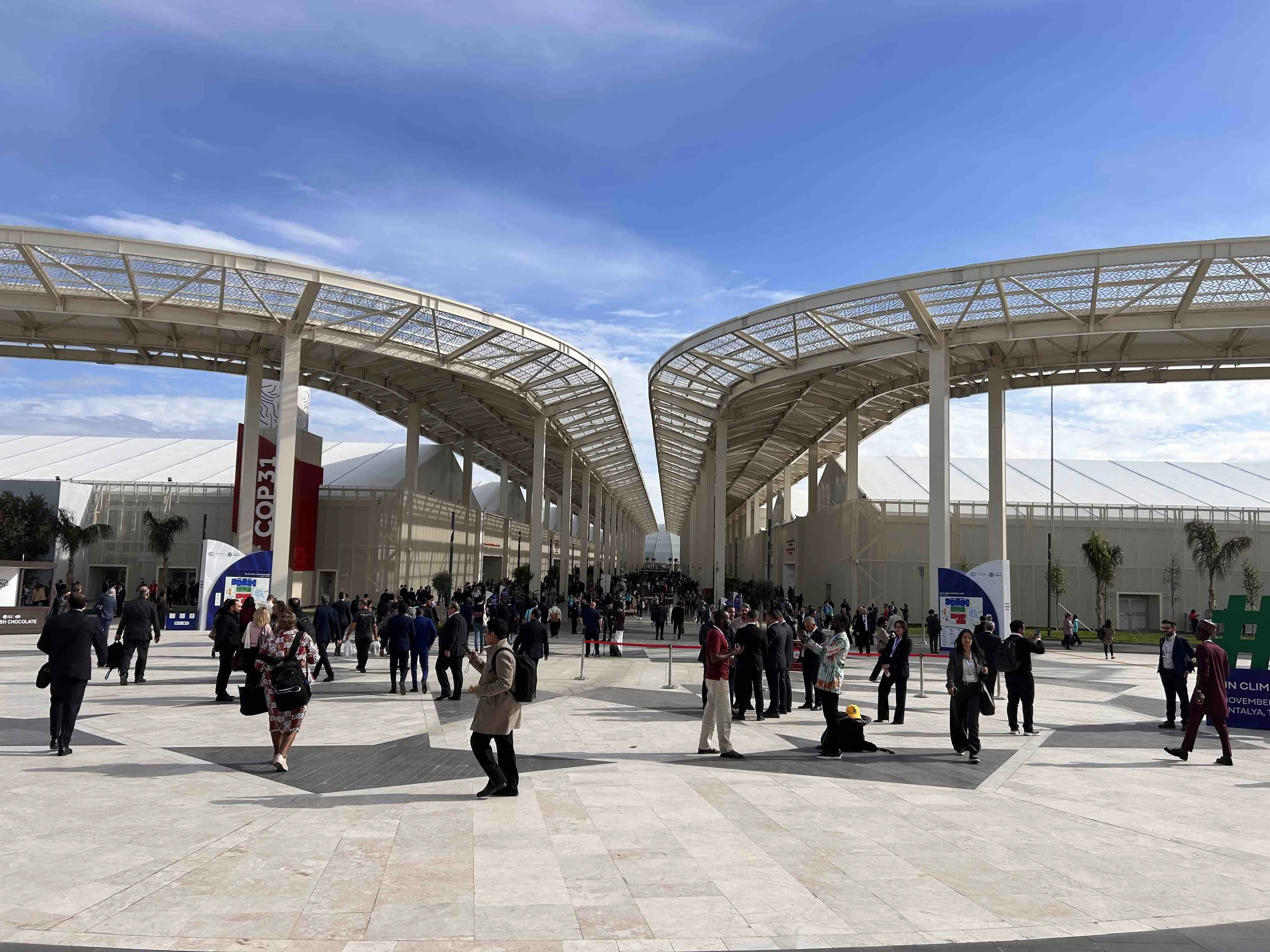
For a short time I wandered over to the Plenary area and to be honest didn’t really know what was going on. There were plenty of people milling-around, some making ‘content’ (both traditional or new media) and a small number dashing to a seemingly important meeting. Thank-goodness for the media to keep us up to date as on-the-ground you’d have no idea what is happening in the discussion rooms. I can’t imagine how it was before the days of mobile-phones!
I feel more comfortable in the Pavilions where there are plenty of ideas about how to make climate changes. I think this is the real benefit of COP31; as it brings together lots of super smart people from literally all around the world to discuss climate issues (whatever their perspective). This would be impossible to achieve online, so surely it must have great value…..
However I think it is up to debate whether there needs to be *quite* as many people.
On arrival I visited the Africa Pavilion to hear about how carbon credits can be applied to African smallholder farmers. I don’t know much about carbon credits but I think they are a means for (usually Western) companies to offset their emissions by supporting climate-positive projects in the developing world. Putting aside that this seems like nouveau- colonialism, it made me realise that these discussions are much-much higher-level than the subjects with which the GPC is involved/interested. The research of our members is involved with developing the climate resistance crops that might be used by smallholder farmers…. if they receive this carbon-credit funding…. and it seems that so far very little of the available finances have made it to farmers.
Slightly closer to the interests of GPC members came at a CGIAR-FAO session on implementation of mechanisms to cope with multiple climate shocks.
The discussions involved the type of investments that are needed to ensure that farmers have greater resilience to climate shocks, such as El Niño, which are almost guaranteed to occur with global warming now over 1.5ºC. I would argue that the best use of funding is to support ten years (or more) of research that can travel the challenging path between plant scientists and farmers.
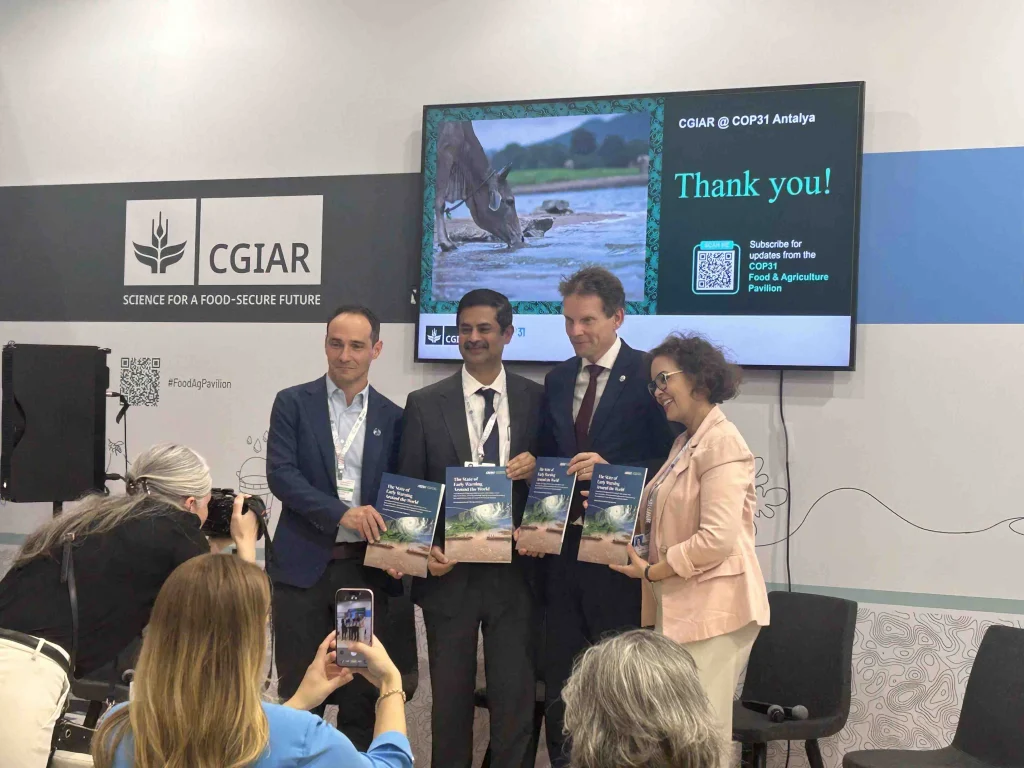
It has been very positive at the CGAIR-FAO Pavilion and I hope that I made some good connections that will help GPC to engage with CGIAR. We shall see…
A final half-day tomorrow at COP31 for me, which includes some speed networking at CGIAR!