
Final Thoughts
My final few hours at COP31 were (again) spent in the Food and Agriculture Pavilion.
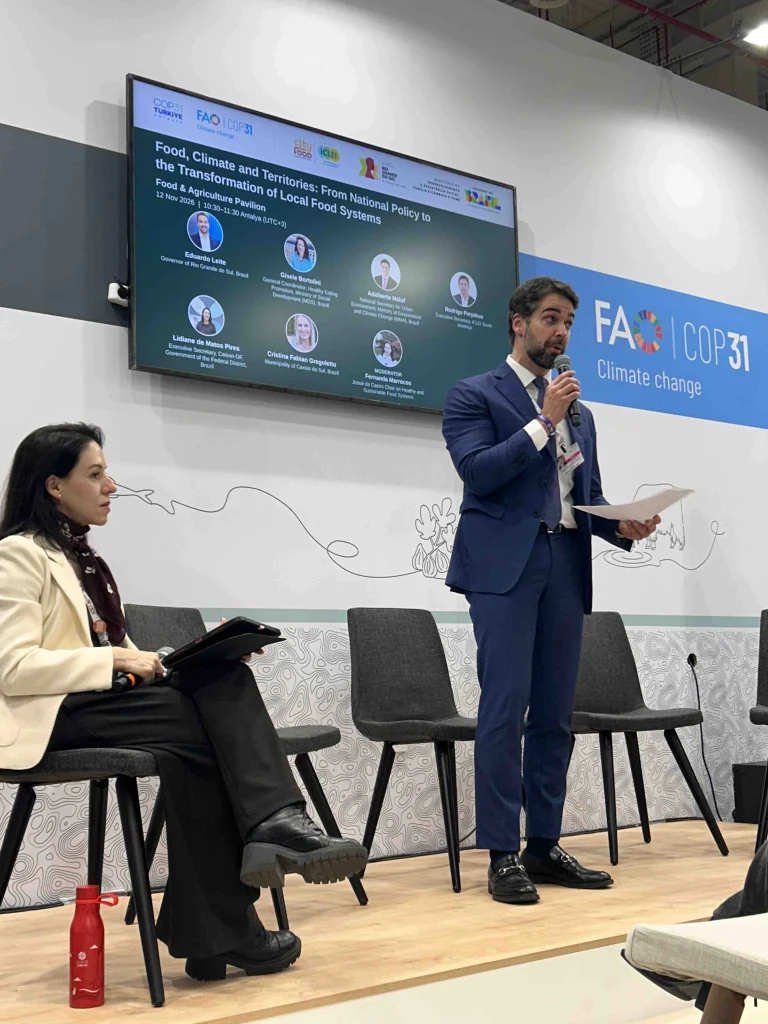
Firstly we learnt about how different levels of Brazilian state and city government are making changes to support more climate-resilient and sustainable food systems.
A huge benefit of COP is that delegates are able to hear passionate talks from senior politicians, in this case Eduardo Leite who is the Governor of Rio Grade do Sol, which is the 5th largest Brazilian state and is larger than the UK. Where else but COP would you be able to hear him speak with just 50 other people?
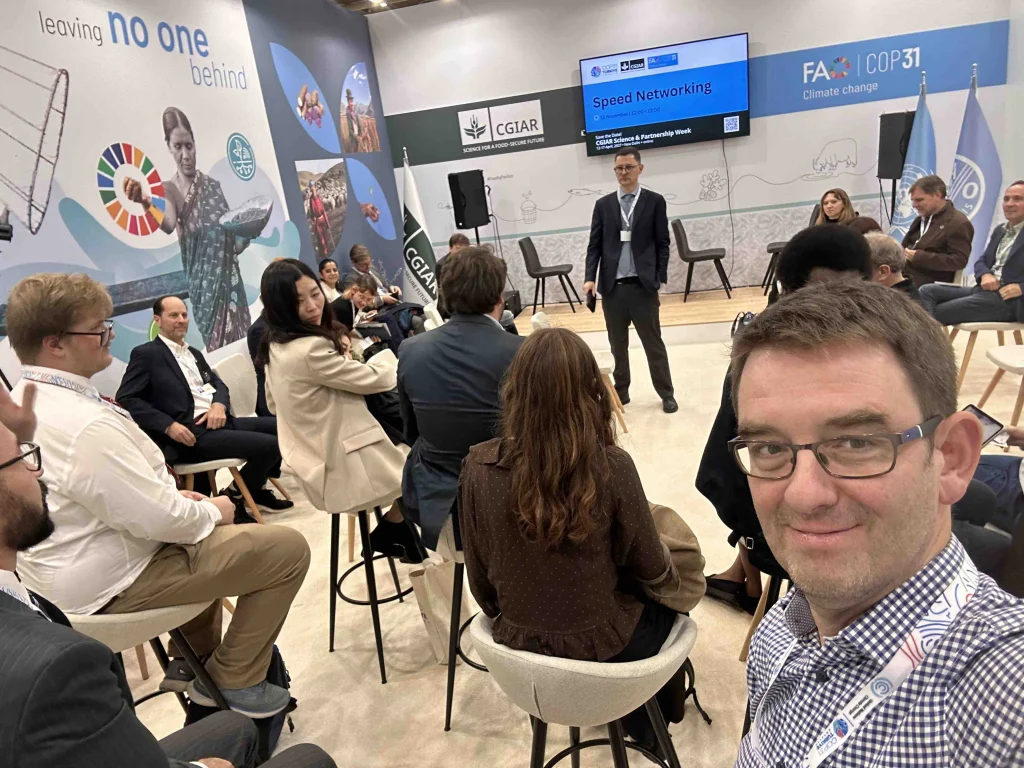
Second was the Speed Networking activity, in which ~30 participants had the chance to discuss ‘their COP’ with another delegates in 3-minutes segments. It was great to engage with new people who had a great variety of roles; from an undergrad at Duke University, a Nigerian Reverend and the Senior Scientist at IRRI.
It was this latter discussion with Bjoern Ole Sander that helped me crystalise some thoughts on the value of COP. As mentioned on a prior blog, the activities and interests of the Global Plant Council membership sit at a much ‘lower’-level than pretty much any conversations at COP31. In this context, the GPC cares more about how to generate climate-resilient crops, whilst most COP delegates want to discuss how to fund programs at a much higher level.
No doubt there is real value in having Observer status as there is cache being at COP31 and demonstrates that the GPC are a serious organisation. I think we could have better maximised the networking opportunities at COP, given that so many people are ‘in the room’. These opportunities will likely grow as the GPC becomes more visible at this type of event.
So how to summarise my experience at COP31?
It was very much a worthwhile trip for me to understand the scale of the event and where the GPC sits in the grand scheme of climate conversations.
The most influential people at COP31 don’t know anything about the specific genotypes that can protect food security for literally billions of people; they care about how the money could move to where they think it should go.
Although its lower profile, it think it’s likely that the biennial Biodiversity COP might be more beneficial for the GPC in which to develop lasting collaborations (as we found at COP15 in Montreal).
Three-days was plenty time for me to spend at COP31 so maximum respect for those people who are there for the entire 2 weeks…. they will end up hearing the same buzzwords a lot.
At the higher level it is fantastic that there appears to be a greater focus at COP31 on agriculture and food systems, which will hopefully continue at COP32 in Ethiopia, where food systems are particularly climate- vulnerable.
Hopefully people around the world will benefit from the negotiations at COP31….but the slam-dunk winners are the hoteliers and restaurateurs of Antalya as well as the Turkish Polis and their overtime!