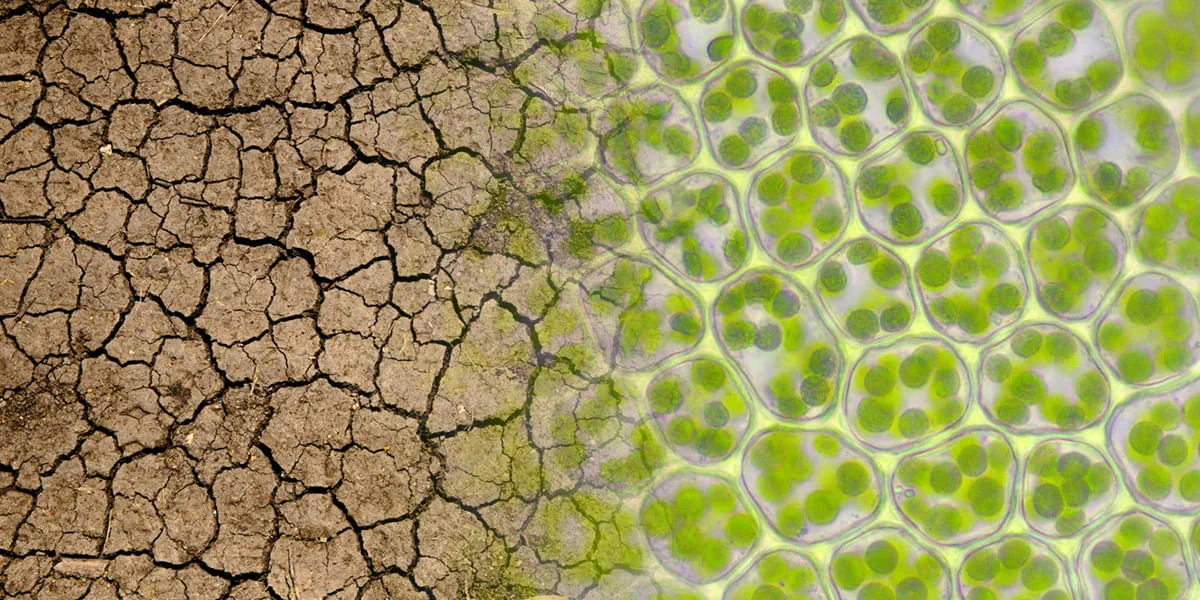
A new study underscores that we still have much to learn regarding how plants will function — and how nutritious they will be — as more carbon enters our atmosphere.
Read More
A report by Dr. Deena Errampalli, Head of the Global Plant Council Delegation at the COP15 (7-19 December 2022 in Montreal, Canada)
Do you know that 60% of terrestrial wildlife, including plant, animal, insect, and fungal species, has been lost in the last 50 years? Similar biodiversity loss is occurring in Marine wildlife, as well. A recent UN Report warns that the current rate of species extinction is at historic levels and is “accelerating.”
There is every reason to be concerned as if we do not take action, the loss of biodiversity will jeopardize food and water supplies and cause ecosystem collapse. Only by working together at the global level can we prevent biodiversity loss.
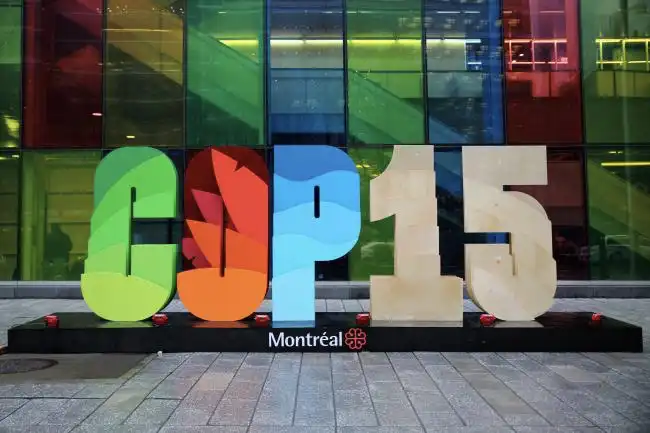
COP 15 was the 15th meeting of the Conference of the Parties (COP15) to the United Nations Convention on Biological Diversity (CBD) that brought together over 12,000 delegates from 188 countries to engage in important negotiations and dialogue around global biodiversity conservation. The parties in COP refer to the countries. COP15 met from 7 -19 December 2022 in Montreal, Canada.
My name is Deena Errampalli; Research Scientist (plant pathology) in Canada and a board member at the Global Plant Council (GPC), and was delighted to lead the in-person GPC delegation, in an Observer capacity, in Montreal. Scientists from different delegations including DSI Scientific Network and the Global Plant Council, advocated for a post-2020 Global Biodiversity Framework by making science-based presentations at the side events and consulting with different parties at the convention.
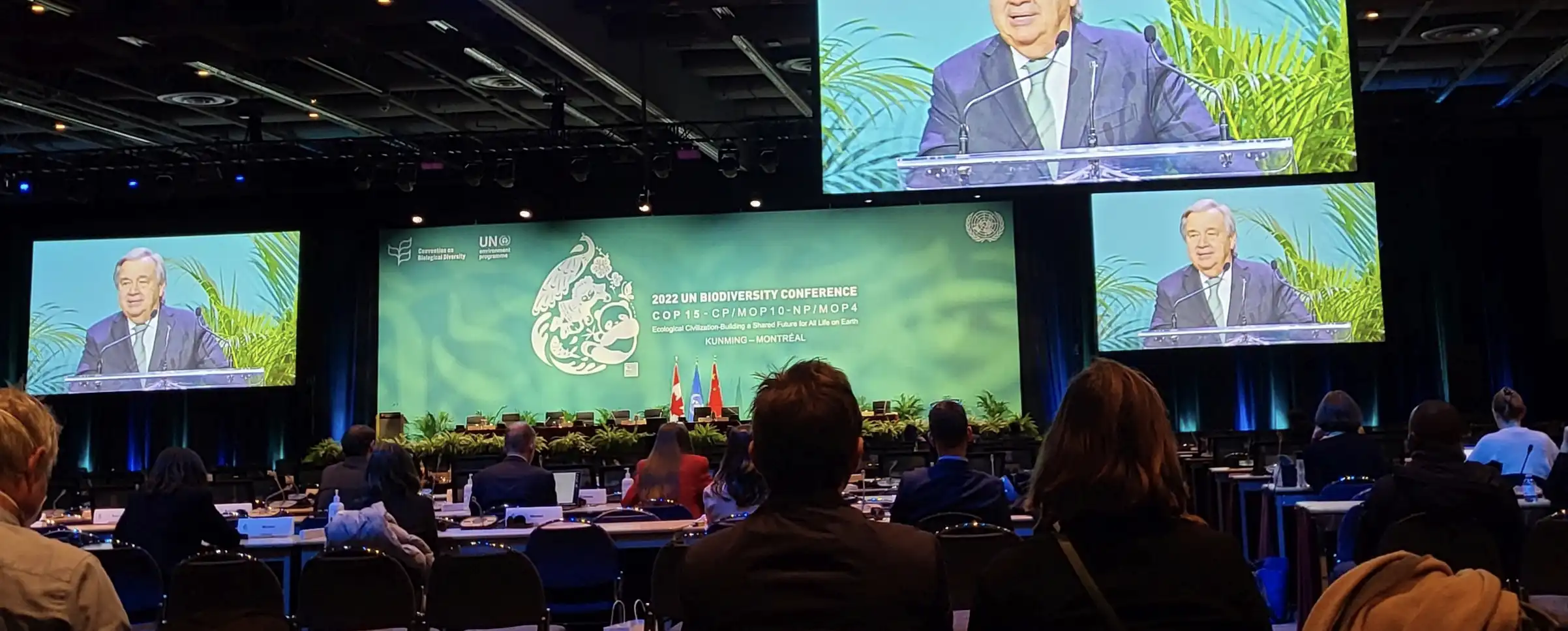
After registering and obtaining a badge, and then immediately doing a COVID rapid test (a daily negative test was required for entrance to the venue), I made it to the COP15 Opening Ceremony and heard inspiring opening remarks from dignitaries. Canada’s Prime Minister, Justin Trudeau’s welcomed the COP15 delegates to Canada with a speech and a funding announcement for a biodiversity saving initiative. Next, the UN Secretary-General António Guterres welcomed the delegates, followed by Minister Huang Runqiu, President of the Fifteenth Meeting of the Conference of the Parties to the United Nations Convention on Biological Diversity (COP 15) and Minister of Ecology and Environment of China in Chinese. Both Francois Legaults, the Premier of Quebec Province, and Valérie Plante, the Mayor of Montreal spoke in French. Of course, there were simultaneous translations to many languages were available at the convention.

The UN secretary general, António Guterres, opened the Convention with a stark message: “Without nature, we are nothing. Nature is our life-support system, and yet humanity seems hellbent on destruction.” He added, “With our bottomless appetite for unchecked and unequal economic growth, humanity has become a weapon of mass extinction,” he said. “[COP15] is our chance to stop this orgy of destruction, to move from discord to harmony.”
The primary aim of COP15 was to ‘give-teeth’ to the Convention on Biological Diversity adopted at Earth Summit in Aichi, Brazil, in 1992, and ratified by 196 countries, albeit with the notable exception of the USA.
Countries from around the world came together at COP15 to agree on a new set of goals to guide global action through 2030 to halt and reverse nature loss and to protect 30 percent of the planet’s land and oceans. It is also known as ‘30 X 30’.
One of the issues that GPC advocated was the Digital Sequence Information (DSI) on genetic sources. As Parties (countries) to the Convention on Biological Diversity debated the issue of access and benefit-sharing from DSI on genetic sources at the COP15 UN Biodiversity Conference, a group of scientists has proposed a multilateral framework where access to DSI from genetic resources is “decoupled” from benefit sharing. On invitation, I presented a case study titled, “How DSI can revolutionize food security: understanding the Sterility Mosaic Disease of Pigeonpea“, at the “A comparative analysis of policy options for DSI under the CBD: how do they measure up?” a side event organized by the DSI Scientific Network at COP15 on 8 December, 2022.
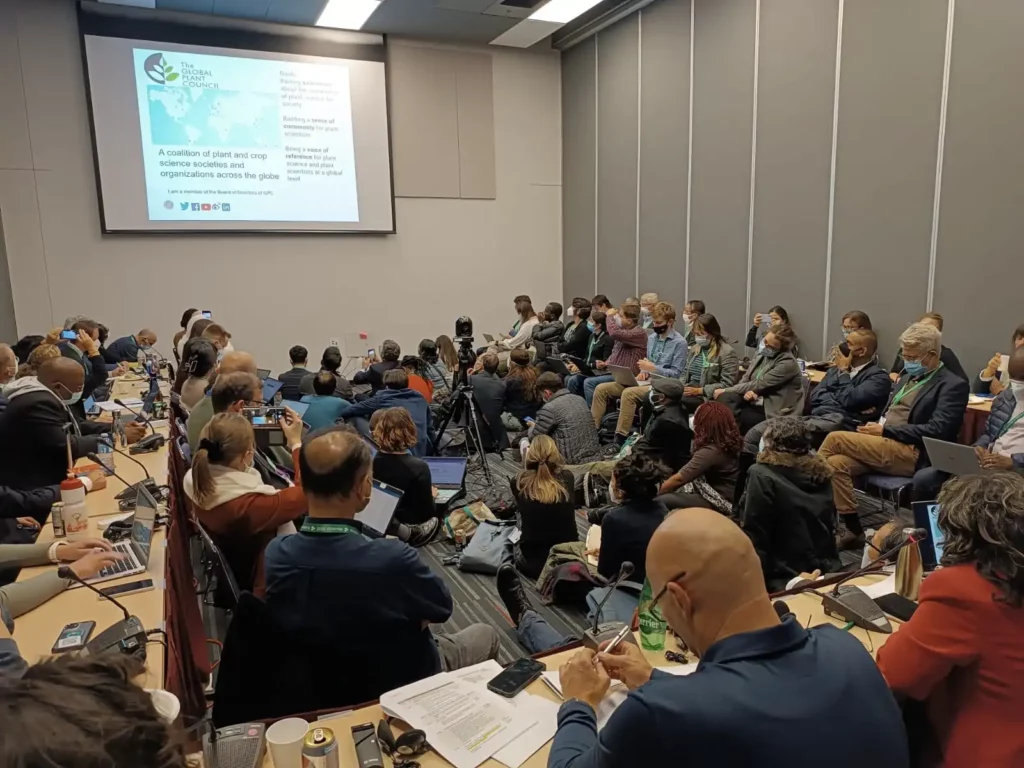
I (from Canada) was invited as a panelist along with Manuela da Silva, Fiocruz (Brazil), Amber Scholz, DSMZ Leibniz (Germany), Guilherme Oliveira, Instituto Tecnologico Vale (ITV; Brazil), and two moderators, Christian Tiambo, Centre for Tropical Livestock Genetic and Health (CTLGH) – International Livestock Research Institute (ILRI; South Africa) and Jens Freitag, Leibniz Institute of Plant Genomics and Crop Plant Research (IPK; Germany). The DSI side event was well-attended and well-received. The panel answered/clarified some of the questions from the audience, which included ‘Parties.’
In the early hours (3:30 am to be precise) of December 19, 2022, after years of negotiations, including two weeks of intense negotiations in Montreal, the delegates from 188 countries finally reached a deal to share benefits from the use of digital sequence information (DSI) derived from genetic resources. COP15 ended with a landmark biodiversity agreement, where nations adopted four goals, 23 targets for 2030.
To put it in perspective, the GBF agreement for nature in Montreal is equivalent to the Paris agreement for Environment. In Paris, the world agreed to an apex target to limit global warming to well below +2C, preferably to +1.5˚C, and with the 2022 GBF the world had agreed to ‘30 x 30’ target.
Despite the hesitations of some, the Convention on Biological Diversity text pledging open access to gene-sequence information was a relief to the scientific research community, which had voiced worries about losing access to genetic sequence libraries. For further details on Global Biodiversity Framework please check the official press release and PDF.
“In Montréal, we have risen to the challenge and united as one global community to address the crisis faced by nature. We agreed on an ambitious path forward for our planet, and have given ourselves the tools to turn the tide. This is a historic moment for nature, and it is our only chance to save what we love and hold dear, before it is too late.”
– The Honourable Steven Guilbeault, Minister of Environment and Climate Change Canada.
The delegates and all the concerned communities worldwide rejoiced to have reached the Global Biodiversity Framework agreement in 2022, and the next steps, the real work begins in implementing it.
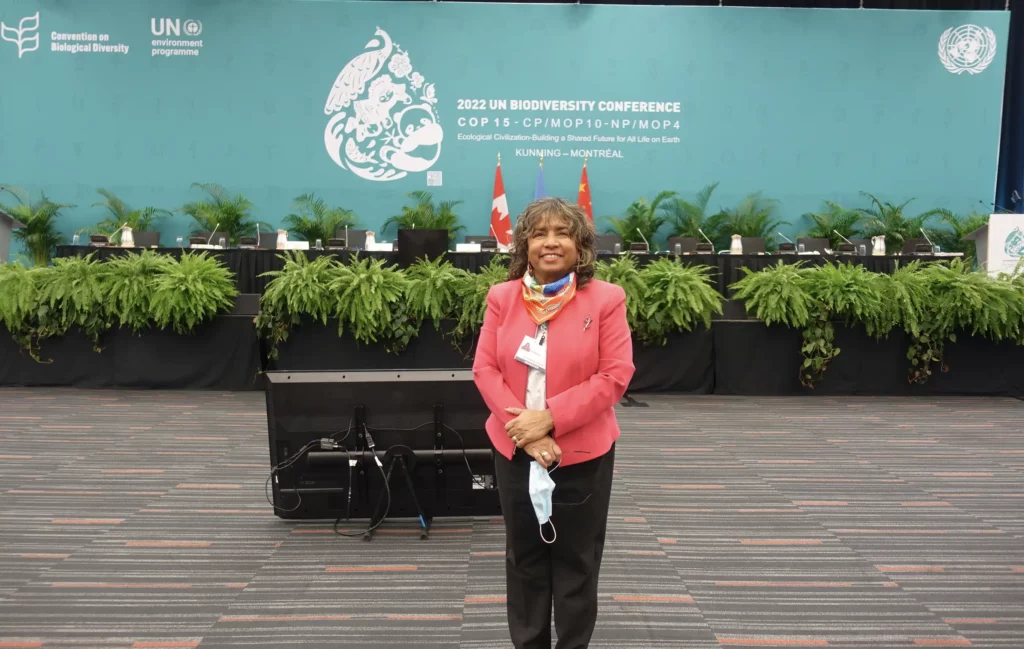
Attending COP 15 and being a part of the convention that saw the GBF agreement approved was a career highlight for me. It was an incredible experience to hear the passionate, at times contradicting, views of so many delegates from across the globe ranging from small island nations such as Fiji to large land-based countries like Canada. A total of 188 countries were present.
The knowledge that all of us were working towards a common goal of protecting the biodiversity of our planet was both exhilarating and humbling. This new “Global Biodiversity Framework” of 2022 has set out targets for the coming decade to 2030. These targets will replace the Aichi targets set for 2011-2020 and will also lead towards the longer 2050 goal: living in harmony with nature.
With the 2022 GBF agreement, I am feeling hopeful and excited for all flora and fauna on this earth. This GBF matters for the future of our food and agriculture. I hope that the nations will follow through with the agreement to protect global biodiversity and realize the dream of a Healthy Planet and Healthy People.
About the author: Dr. Deena Errampalli is a scientist (Plant Pathologist) in agriculture. She is also a Board member of the Global Plant Council, a not-for-profit Corporation based in Canada. Download her report here.
About The Global Plant Council: an umbrella organization of plant, crop, agricultural, and environmental science societies and organizations across the globe representing thousands of experts. In the past few years, the GPC has provided a platform for debate on open access to digital gene-sequence information.