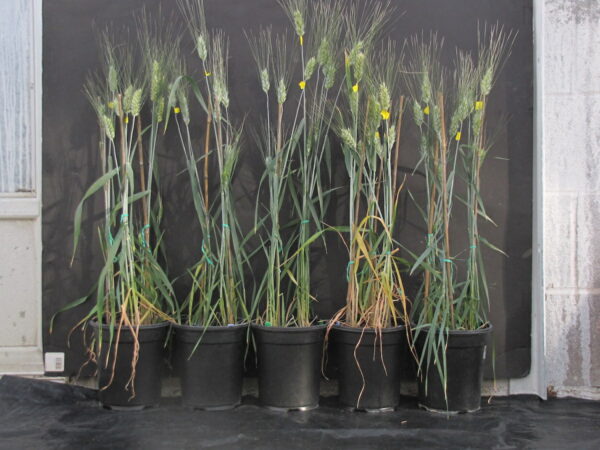

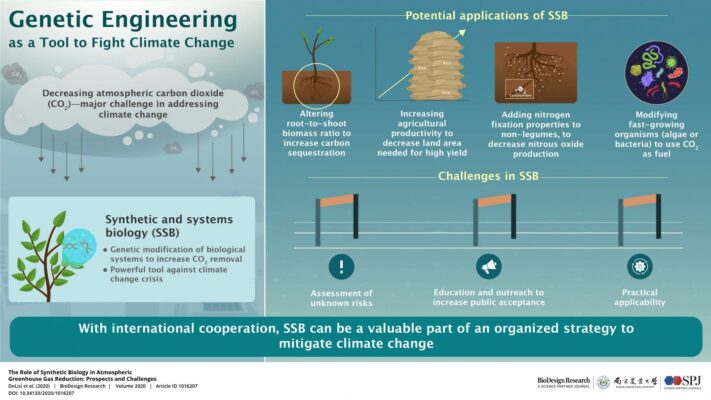
Researchers know how to make precise genetic changes within the genomes of crops, but the transformed cells often refuse to grow into plants. One team has devised a new solution.
Tropical forests may be more resilient to predicted temperature increases under global climate change than previously thought, a study published suggests. The results could help make climate prediction models more accurate, according to the authors.
Planting Parasites: Unveiling Common Molecular Mechanisms of Parasitism and Grafting. β-1,4-glucanase, a cell wall degrading enzyme, is integral for plant parasitism and cross-species grafting in the plant family Orobanchaceae.
Researchers identify a unique version of a photosynthetic enzyme that has been in use for billions of years. A team of scientists has discovered an ancient form of rubisco, the most abundant enzyme on Earth and critical to life as…
Researchers generated genome sequences for nearly 600 green millet plants and released a very high quality reference S. viridis genome sequence. Analysis of these plant genome sequences also led researchers to identify a gene related to seed dispersal in wild…
From pollen forecasting, honey analysis and climate-related changes in plant-pollinator interactions, analysing pollen plays an important role in many areas of research. Microscopy is still the gold standard, but it is very time consuming and requires considerable expertise. Scientists have…
Deprived of sunlight, plants are unable to transform carbon dioxide from the atmosphere into sugars. They are essentially starved of one of their most important building blocks. The plant’s not-so-secret weapon to combat this and other scarcity is autophagy. Similar…
Drought causes major crop losses in many regions of the world, and climate change threatens to exacerbate the occurrence of drought in temperate as well as arid regions. Researchers used a sophisticated mathematical modelling approach to study the effects of…
Genome duplications play a major role in the development of forms and structures of plant organisms and their changes across long periods of evolution. Biologists made this discovery in their research of the Brassicaceae family. To determine the scope of…
Scientists have engineered a key plant enzyme and introduced it in Escherichia coli bacteria in order to create an optimal experimental environment for studying how to speed up photosynthesis, a holy grail for improving crop yields. Scientists have known that…