

Authors: Showkat Ahmad Ganie & Ricardo Antunes de Azevedo, University of Essex
Over the past three decades, plant scientists have identified thousands of genes and quantitative trait loci (QTLs) linked to tolerance against drought, heat, salinity, and other environmental stresses. These discoveries have transformed our understanding of how plants sense and respond to stress at the molecular level. Yet, despite this wealth of knowledge, only a handful of stress-resilient crop varieties are widely grown by farmers today. So why does this gap persist?
In a recent Opinion article in Annals of Applied Biology, we argue that the problem is not a lack of scientific discovery, but a disconnect between how stress tolerance is studied and how crops actually perform in real agricultural systems.
From lab success to field failure
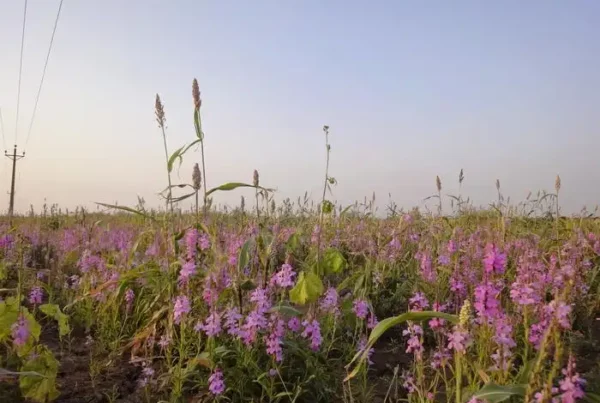
Much of what we know about stress tolerance comes from controlled experiments – often in model plants or greenhouse conditions – where a single stress is applied in isolation. These studies are essential for uncovering gene function, but they rarely capture the complexity of real fields, where plants face multiple, interacting stresses at once. Drought rarely comes alone; it often coincides with heat, nutrient limitation, salinity, or air pollution.
As a result, traits that look promising in the lab may perform unpredictably – or even fail – under field conditions. This helps explain why overexpressing well-known “stress genes” has rarely led to stable yield gains at scale.
The limits of phenotyping and selection
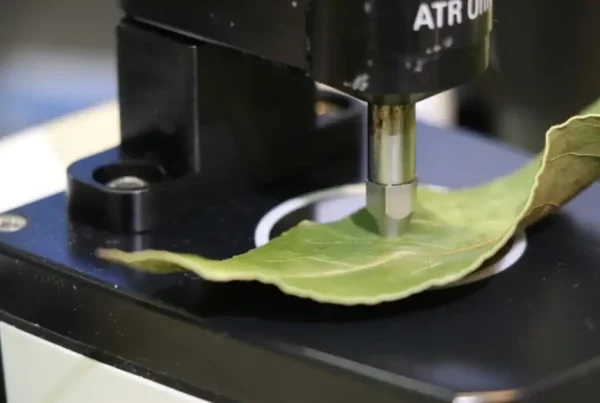
Another bottleneck lies in how we measure plant performance. Many high-throughput phenotyping approaches focus on visible, whole-plant traits, such as canopy temperature or growth rate. However, critical stress-adaptive processes – like tissue-specific ion compartmentalization or cellular buffering mechanisms – can remain invisible at the canopy level.
Without better ways to connect cellular processes to field-level performance, breeding decisions risk favoring traits that look good short-term but fail under real-world variability.
Incentives, funding, and the publishing ecosystem
Scientific incentives also matter. Breakthrough gene discoveries are often rewarded more than long-term, multi-year field trials. Funding cycles, publication timelines, and career structures frequently favor rapid mechanistic insights over slower, integrative work that links genetics to agronomy.
This imbalance does not reflect a lack of effort or intention – but it does shape what kinds of research are prioritized and translated.
Adoption is not automatic
Even when a stress-resilient trait performs well, adoption is not guaranteed. Farmers operate under economic, regulatory, and social constraints. Traits that reduce risk in one environment may be unattractive in another. Without early engagement with farmers, extension services, policymakers, and agribusiness stakeholders, promising innovations can stall before reaching the field.
What needs to change?
The way forward is not to abandon molecular discovery, but to better integrate it with:
- Multi-stress testing under realistic conditions
- Evolution-guided breeding using natural diversity
- Improved phenotyping that links cells to canopies
- Longer-term, field-relevant funding strategies
- Co-development with farmers and stakeholders
Stress-resilient crops will not emerge from a single gene, technology, or discipline. They will emerge from collaboration across scales, sectors, and societies.
As climate change accelerates, bridging this gap is no longer optional. It is essential for turning scientific promise into agricultural reality.
Reference
Ganie, S. A., & Azevedo, R. A. (2026). Why stress‐resistant crops remain a scientific promise rather than a farming reality? Bridging the gap between genetic discovery and agricultural impact. Annals of Applied Biology, 188(1), 6-10. https://doi.org/10.1111/aab.70050