
A new study published in Nature Ecology & Evolution connects plant and insect physiology, chemical ecology, molecular function, and evolutionary analysis to offer a new perspective on plant–insect coevolution. The research team was led by Yu-Hsien Lin, Assistant Professor in the Global Agricultural Technology and Genomic Science Program (Global ATGS), International College, National Taiwan University, in collaboration with international research partners and Assistant Professor Ching-Wen Tan at National Chung Hsing University.
That fresh “green” smell released when grass is cut is more than just a familiar scent of nature. It often comes from compounds known as green leaf volatiles (GLVs), which plants release within seconds after being wounded, attacked by herbivores, or exposed to environmental stress.
These molecules are not merely by-products of damage—they are part of a sophisticated chemical signaling system that helps plants defend themselves, suppress pathogens, attract the natural enemies of herbivores, and even warn neighboring plants to prepare for attack.
How plants and insects use scent
Building on Lin’s earlier work on insect salivary enzymes, the study investigates the evolutionary origin, functional diversification, and catalytic mechanism of hexenal isomerase (Hi) enzymes in both plants and lepidopteran insects.
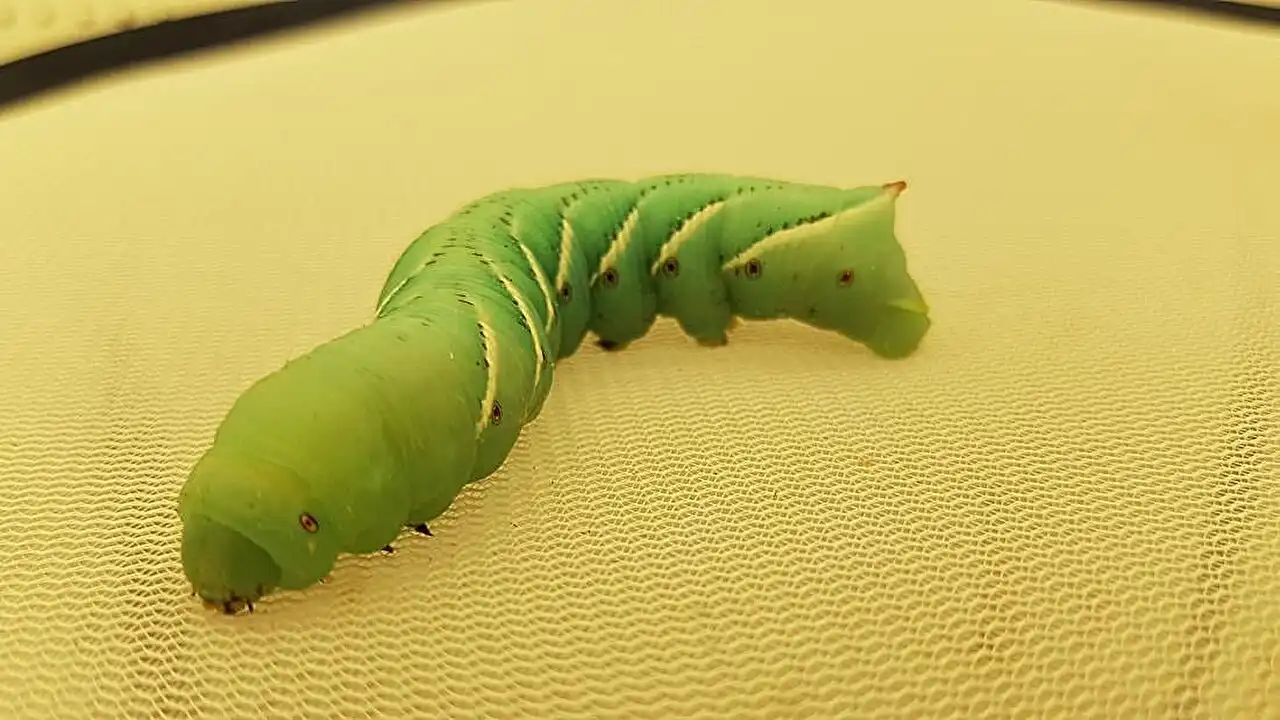
The researchers found that Hi enzymes in lepidopteran saliva can convert Z-3-hexenal, one of the earliest GLVs released by wounded plants, into E-2-hexenal, thereby altering the composition of plant-emitted volatiles. Because increased E-2-hexenal may more effectively attract the natural enemies of caterpillars, this transformation can effectively amplify the plant’s alarm signal while the insect is feeding.
Intriguingly, plants themselves also possess enzymes capable of catalyzing the same chemical reaction. However, insect and plant Hi enzymes come from entirely different protein families, showing that they evolved similar chemical functions through distinct evolutionary routes.
Tracing the enzymes through evolution
The team further analyzed 34 species of Lepidoptera and found that insect Hi is largely restricted to more recently diversified lineages, suggesting that this function was not broadly present early in lepidopteran evolution but instead emerged gradually in specific groups.
The study also revealed substantial differences in enzyme activity among species. In parallel, protein structure prediction using Google DeepMind’s AI system AlphaFold, together with functional analyses, helped clarify the catalytic mechanism of insect Hi.
On the plant side, molecular evolutionary analyses suggest that plant-specific Hi likely originated in mesangiosperms, linking its emergence to the ecological context shaped by the rise and diversification of flowering plants.
“The study connects plant and insect physiology, chemical ecology, molecular function, and evolutionary analysis to offer a new perspective on plant–insect coevolution,” says first and co-corresponding author Prof. Yu-Hsien Lin.
“The next time we notice the familiar scent of freshly cut grass, it may be worth remembering that this is not just the smell of plants—it may also be a chemical distress signal, and a trace of a plant–insect arms race that has unfolded over millions of years.”
Read the paper: Nature Ecology & Evolution
Article source: National Taiwan University via Phys.org
Image credit: National Taiwan University